Will the Bank of Korea Raise Rates Again in August After Its July Hike?
A surprisingly strong second-quarter GDP and GDI reading has fueled speculation the Bank of Korea could deliver back-to-back rate hikes, though several analysts still favor October as the more likely timing.
A surprisingly strong second-quarter GDP and GDI reading has fueled speculation the Bank of Korea could deliver back-to-back rate hikes, though several analysts still favor October as the more likely timing.
South Korea's central bank is facing fresh pressure over its next policy move after unexpectedly robust second-quarter growth data reignited debate about whether it will raise the benchmark interest rate again in August, just one month after its July increase.
Shinhan Securities and iM Securities said on July 23 that they now expect the Bank of Korea to deliver a second consecutive hike next month. Citigroup, JPMorgan and Korea Investment & Securities have also recently flagged the possibility of back-to-back increases, a scenario that would mark a notably aggressive tightening pace for the central bank.
The renewed speculation follows remarks by BOK Governor Shin Hyun-song on July 16, when he said the bank would keep all options open and that its decision would hinge on second-quarter national income data and July inflation figures. He noted he would watch closely whether the first quarter's unusually strong GDP and gross domestic income, or GDI, readings hold up or are revised lower.
The data gave hawks plenty of ammunition: real GDI jumped 15.6% in the second quarter, the fastest pace in more than 38 years, since the first quarter of 1988. The gap between real GDI and GDP growth widened to 11.9 percentage points, up from 9.4 points in the prior quarter. Because GDI captures actual purchasing power, the BOK is concerned that such a sharp rise could translate into demand-side inflation pressure down the road.
Kim Myung-sil, an analyst at iM Securities, argued the odds of an August move are not low, pointing to bumper semiconductor profits, rising stock prices, larger performance bonuses, stronger capital investment and higher tax revenue as forces that could spill over into broader income and consumption growth.
Not everyone agrees. Some analysts expect the BOK to hold off until October, noting that falling international oil prices could ease July consumer inflation and that the GDP-GDI gap may have already peaked in the second quarter as semiconductor price gains slow. Lim Jae-kyun of KB Securities said much of the recent boost to private consumption came from Samsung Electronics' promotional campaigns and one-off disaster relief payments rather than sustained demand pressure, making consecutive hikes unlikely in his view. Lee Seung-hoon of Meritz Securities added that the BOK's prior back-to-back hikes in 2021 and 2022 came amid surging home prices or urgent inflation-fighting needs, conditions he does not see repeating now despite the economy's solid performance.
Related companies
Where it matters
Related coverage
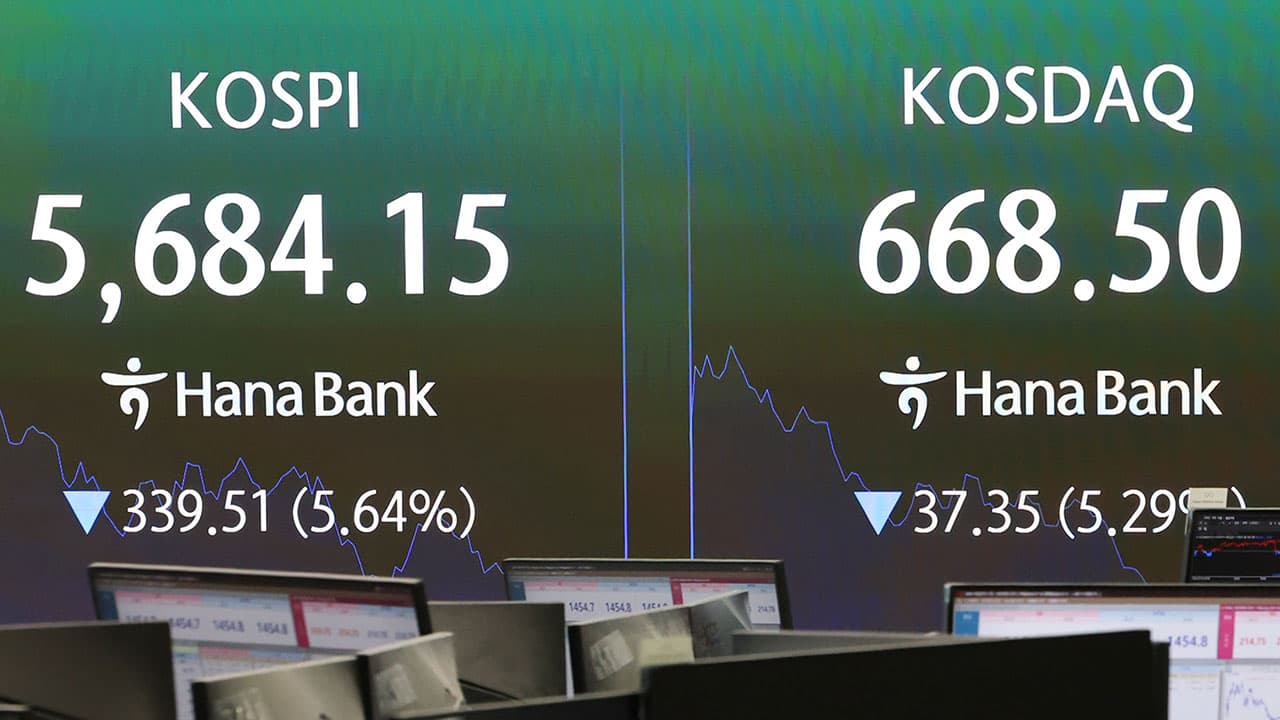
KOSPI, KOSDAQ Trigger Sell-Side Sidecar for Second Time This Week Amid Sharp Reversal
AI Chip Boom Puts SK Hynix, Samsung and Kioxia Earnings in the Spotlight
SK Hynix and Samsung Electronics are preparing to report earnings that will gauge investor confidence in memory chips, as rising high-bandwidth memory prices and the rollout of HBM4 ease worries about a second-half slowdown.
SK Hynix, Samsung and Kioxia Face Pivotal Earnings Test on AI Swings
Upcoming earnings from SK Hynix and Samsung Electronics will gauge whether investor enthusiasm for AI-driven memory chips can withstand recent market turbulence, as Kioxia's share slide adds to the jitters.