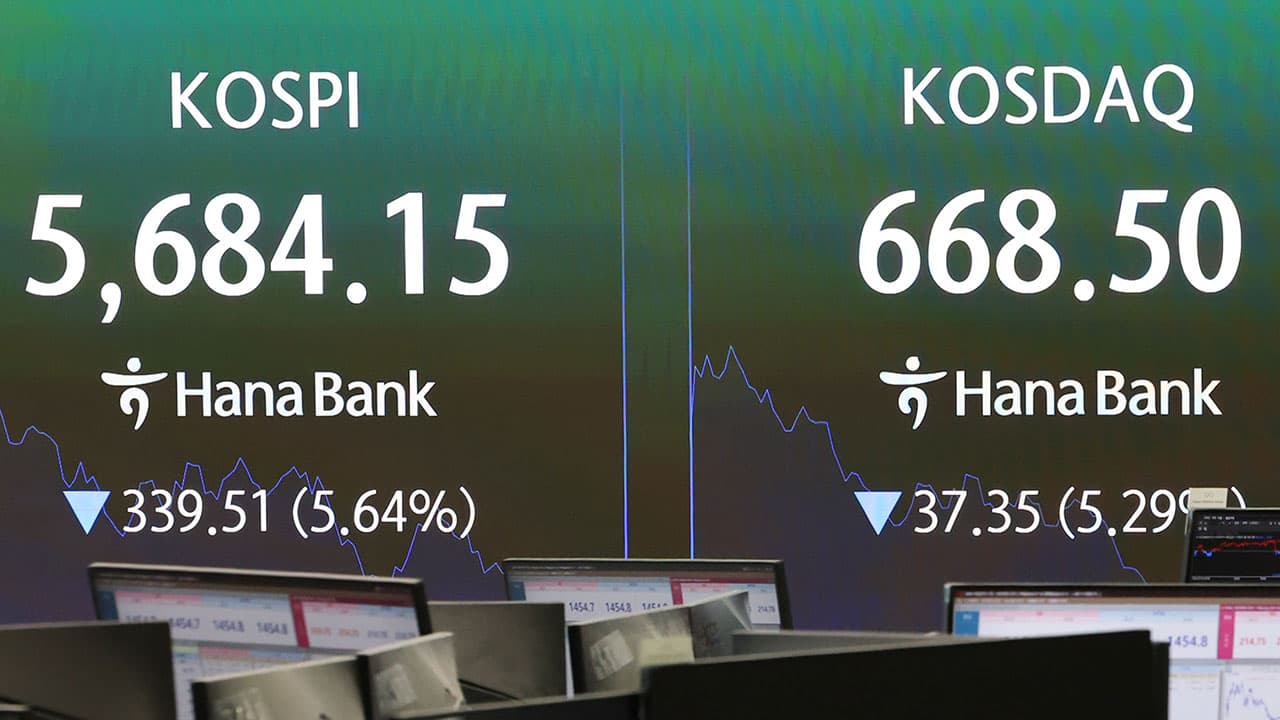
KOSPI, KOSDAQ Trigger Sell-Side Sidecar for Second Time This Week Amid Sharp Reversal
South Korea's KOSPI and KOSDAQ both activated sell-side circuit breakers known as 'sidecars' on Thursday as futures prices reversed violently from early gains, marking the second such trigger this week amid tech-sector jitters following SK Hynix's disappointing earnings.
South Korea's KOSPI and KOSDAQ both activated sell-side circuit breakers known as 'sidecars' on Thursday as futures prices reversed violently from early gains, marking the second such trigger this week amid tech-sector jitters following SK Hynix's disappointing earnings.
South Korea's two main stock exchanges were jolted by extreme volatility on Thursday, with both the KOSPI and KOSDAQ triggering sell-side 'sidecar' circuit breakers within the same session — the second time this has happened in a single week.
The KOSPI opened firmly higher, climbing as much as 1.09% to touch 6,089.11 points, buoyed by early optimism among investors. However, the rally proved short-lived. Within hours, sentiment flipped sharply, and KOSPI futures plunged 5.15% from the previous session's close, automatically activating the exchange's sell-side sidecar mechanism, which briefly suspends program sell orders to curb panic-driven selling.
The KOSDAQ market saw an even steeper swing. KOSDAQ150 futures cratered 6.21%, crossing the threshold required to trigger its own sell-side sidecar. The sidecar system, distinct from the more severe 'circuit breaker' that halts all trading, is designed to temporarily pause automated program sell orders for five minutes when futures prices move beyond preset limits, giving markets a brief window to stabilize.
Market watchers pointed to lingering disappointment over SK Hynix's latest earnings report as a key catalyst behind the reversal. The chipmaker's results failed to meet the lofty expectations investors had built up around the memory chip boom, feeding renewed anxiety across the broader technology and semiconductor sector that dominates both indices.
Thursday's episode marks the second sell-side sidecar activation of the week, underscoring how fragile investor confidence has become as concerns mount over whether the artificial intelligence and memory-chip rally that lifted Korean equities to record highs earlier in the year can be sustained. Analysts warn that such repeated volatility spikes may signal a broader recalibration of expectations for the tech-heavy Korean market.
Regulators and exchange officials have not signaled any additional measures beyond the automatic sidecar mechanisms, which are standard tools built into Korea's trading infrastructure to manage abrupt swings. Investors are now watching closely for further earnings updates from major chipmakers and tech firms to gauge whether the recent turbulence is a temporary correction or the start of a deeper pullback.
Related companies
Where it matters
Related coverage

SK Hynix Shares Slide Despite Record Profit as AI Chip Demand Fails to Meet Sky-High Expectations

Will the Bank of Korea Raise Rates Again in August After Its July Hike?
AI Chip Boom Puts SK Hynix, Samsung and Kioxia Earnings in the Spotlight
SK Hynix and Samsung Electronics are preparing to report earnings that will gauge investor confidence in memory chips, as rising high-bandwidth memory prices and the rollout of HBM4 ease worries about a second-half slowdown.
SK Hynix, Samsung and Kioxia Face Pivotal Earnings Test on AI Swings
Upcoming earnings from SK Hynix and Samsung Electronics will gauge whether investor enthusiasm for AI-driven memory chips can withstand recent market turbulence, as Kioxia's share slide adds to the jitters.