North Korea Deepens Ties With China and Russia Amid Regional Realignment
Pyongyang hosted a senior Chinese delegation for the 65th anniversary of its friendship treaty with Beijing while sending Foreign Minister Choe Son Hui to Moscow, as it works to balance its two main strategic partners.
Pyongyang hosted a senior Chinese delegation for the 65th anniversary of its friendship treaty with Beijing while sending Foreign Minister Choe Son Hui to Moscow, as it works to balance its two main strategic partners.
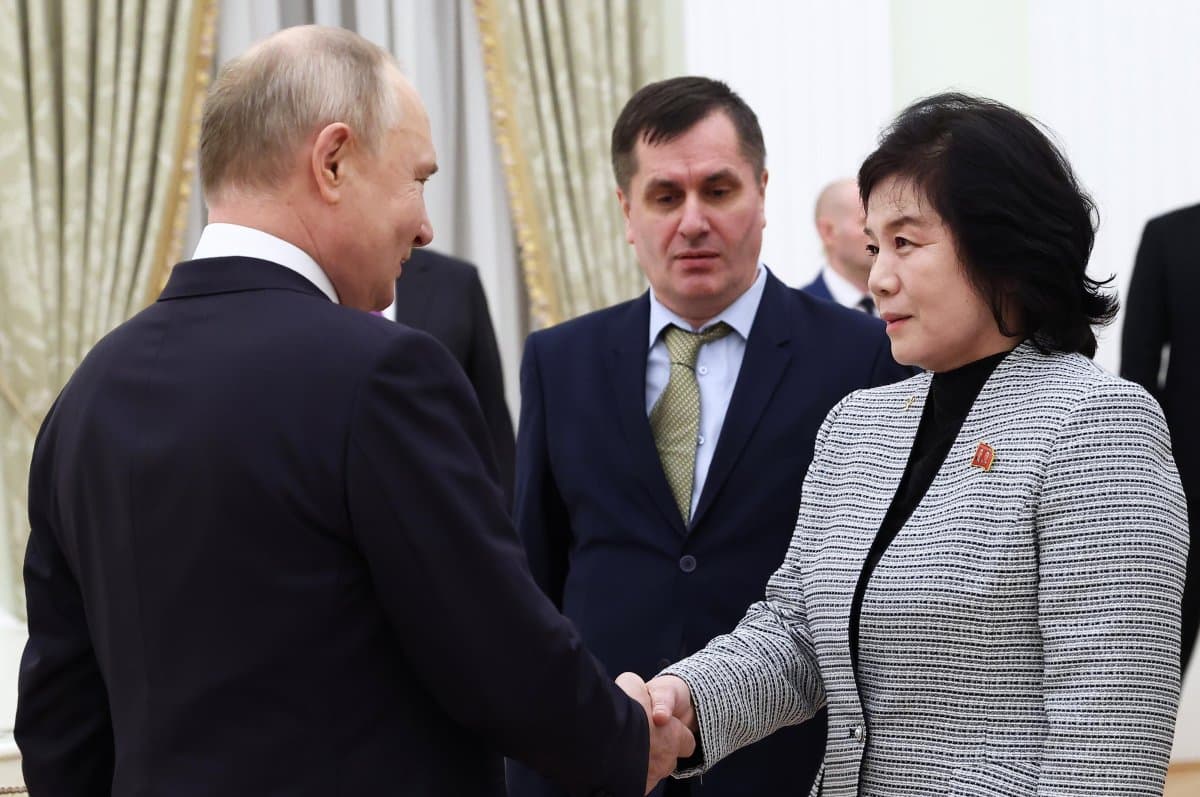
North Korea is stepping up diplomatic outreach to both China and Russia, hosting a high-level Chinese delegation to mark the 65th anniversary of the Sino-North Korean friendship treaty while dispatching Foreign Minister Choe Son Hui to Moscow at the invitation of her Russian counterpart, Sergei Lavrov.
According to state media, Choe departed Pyongyang aboard a government aircraft over the weekend for what Russia's foreign ministry described as an official visit. It marks her first trip to Russia in roughly nine months and the first major high-level exchange between the two countries since North Korea opened a memorial in April honoring troops it sent to support Russia's war effort.
Analysts say the trip's timing is notable because it was not tied to any previously scheduled summit or anniversary, fueling speculation that Choe may be laying the groundwork for a visit by North Korean leader Kim Jong Un to Russia. Russian President Vladimir Putin reportedly extended invitations to Kim during their June 2024 summit and again this year on the sidelines of events in China commemorating the end of World War II in Asia.
On the China front, ties appear to be recovering swiftly around the treaty anniversary. Kim and Chinese President Xi Jinping exchanged congratulatory messages, and Wang Huning, chairman of China's top political advisory body, led a delegation to Pyongyang that included a visit to the Wonsan Kalma coastal resort, one of Kim's signature development projects. Experts say the visit may point to discussions on bringing larger numbers of Chinese tourists to the site, an avenue that could support North Korea's economy without directly breaching U.N. sanctions.
Park Won-gon, a North Korea studies professor at Ewha Womans University, said Pyongyang finds diplomatic wins easier to showcase than economic ones, suggesting that a Xi visit followed by a Kim trip to Russia would be framed domestically as major achievements. He added that practical three-way cooperation between North Korea, China and Russia has struggled to advance, though a joint development project along the Tumen River could offer a workable channel.
Despite the flurry of activity, analysts caution against reading the moves as evidence of a formal trilateral alliance, noting that Pyongyang's relationships with Beijing and Moscow remain largely separate and are driven by differing interests. The engagement nonetheless underscores North Korea's effort to shore up support from both partners as South Korea, the United States and Japan deepen their own trilateral cooperation, including a recent agreement to jointly promote small modular reactor technology abroad.
Where it matters
Related coverage
Kim Orders Major Expansion of North Korea's Intelligence Network

Russia Wants 30,000 More North Korean Troops for Ukraine War, Zelensky Says
North Korea-China Trade Rises in First Half of 2026 Despite June Slowdown
