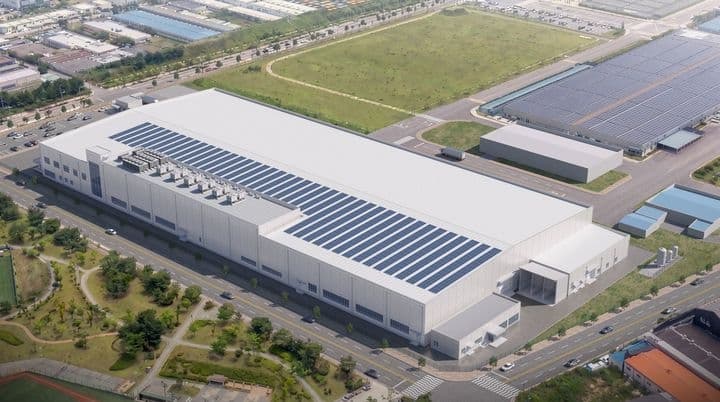
Samsung and SK Hynix Reject KEPCO's $18.7 Billion Electricity Prepayment Plan
Samsung Electronics and SK Hynix have turned down a proposal from state-run utility KEPCO to prepay $18.7 billion for power grid upgrades, citing uncertainty over future chip demand.
Samsung Electronics and SK Hynix have turned down a proposal from state-run utility KEPCO to prepay $18.7 billion for power grid upgrades, citing uncertainty over future chip demand.
Samsung Electronics and SK Hynix have declined a request from Korea Electric Power Corporation (KEPCO) to prepay roughly $18.7 billion toward upgrading the electricity grid needed to supply South Korea's planned semiconductor mega clusters. Industry sources say both chipmakers concluded the upfront financial commitment carried too much risk given how unpredictable memory and foundry demand has become.
KEPCO had proposed the prepayment scheme as a way to fund large-scale infrastructure works, including new transmission lines and substations, that would be required to power the massive fabs planned for hubs such as the Yongin semiconductor cluster. Because chip plants consume enormous amounts of electricity around the clock, utilities have increasingly looked to major manufacturers to help shoulder the upfront cost of building out capacity ahead of time.
Samsung and SK Hynix, however, pushed back on committing such a large sum years in advance of actual production ramp-ups. According to reports, both companies argued that with global semiconductor demand still swinging between AI-driven boom cycles and broader market softness, locking in nearly two decades' worth of electricity spending upfront was not financially prudent at this stage.
The rejection underscores the broader difficulty facing South Korea's chip industry as it tries to balance aggressive long-term expansion plans with near-term uncertainty. Samsung has faced its own operational headwinds recently, including slower-than-hoped progress in its foundry business and cautious capital spending, making large non-core financial commitments a harder sell internally.
The standoff also raises questions about how South Korea will finance the power infrastructure needed to keep its chip clusters competitive against rivals in the United States, Taiwan and elsewhere, all of which are racing to expand fabrication capacity. KEPCO may need to explore alternative funding models, such as government-backed loans or phased payment structures, to keep the infrastructure buildout on schedule.
Neither Samsung nor SK Hynix has ruled out cooperating with KEPCO on future infrastructure funding, but both appear to want more flexible terms that don't tie up capital so far ahead of demand visibility. Analysts say the outcome of these negotiations will be closely watched as a bellwether for how Korea's semiconductor sector manages the tension between long-range planning and short-term market volatility.
Related companies
Where it matters
Related coverage
Samsung Electronics, SK Hynix to Complete Share Buybacks by Mid-November
Samsung Electronics and SK Hynix are expected to finalize their share buybacks by mid-November, bolstering the domestic stock market.
Seoul Stocks End Almost Flat as Investors Weigh Fed's Rate Hike
Seoul Shares Rise Late Wednesday Morning on Tech Gains