Samsung SDI clinches US battery deal worth over $1.4 billion
Samsung SDI's American subsidiary has signed a three-year contract worth more than 2 trillion won ($1.36 billion) to supply LFP battery cells for energy storage systems to a major US energy company, marking the firm's entry into the LFP segment.
Samsung SDI's American subsidiary has signed a three-year contract worth more than 2 trillion won ($1.36 billion) to supply LFP battery cells for energy storage systems to a major US energy company, marking the firm's entry into the LFP segment.
Samsung SDI announced Wednesday that its US subsidiary, Samsung SDI America, has signed a deal worth more than 2 trillion won ($1.36 billion) to supply lithium iron phosphate, or LFP, battery cells for energy storage systems to a leading American energy company. Deliveries under the three-year agreement are scheduled to begin in 2027, with the buyer not publicly identified.
The contract represents Samsung SDI's first major push into LFP batteries, a chemistry it had largely avoided in favor of nickel-cobalt-aluminum, or NCA, cells. The company said years of research had improved the competitiveness of its LFP technology, citing gains in energy density achieved through differentiated materials and electrode-plate processing methods.
The LFP cells will be produced at Samsung SDI's existing US manufacturing site by converting current production lines rather than building new capacity, the company said. Samsung SDI already runs a joint electric vehicle battery plant with Stellantis in Indiana and has been redirecting some output toward energy storage batteries as market demand shifts.
A Samsung SDI official described the agreement as opening up a valuable new market, saying the company intends to expand its ESS lineup by combining fire safety with performance and price competitiveness. The firm added that it is in talks with several other global customers on further LFP and NCA supply deals, suggesting more contracts could follow in the coming months.
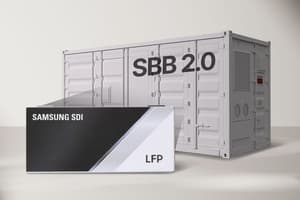
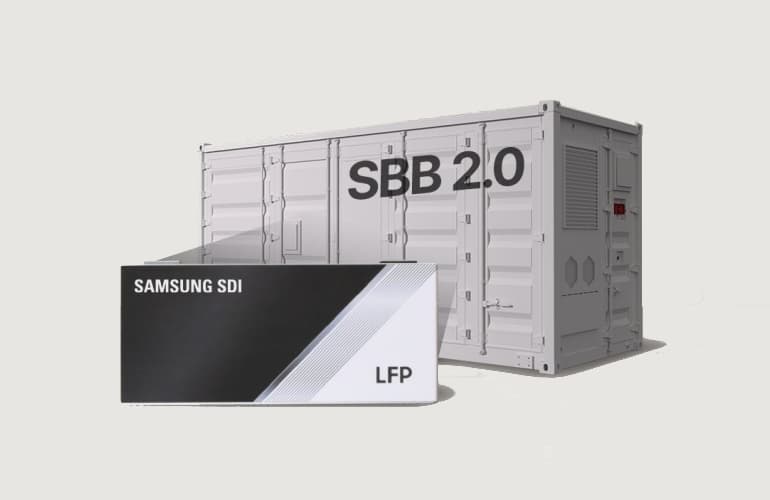
The new cells will be integrated into Samsung Battery Box 2.0, the company's containerized ESS product that pairs batteries with fire-safety systems, marking the first time the line has used prismatic LFP cells. Analysts note that Samsung SDI's prismatic cell design, built with a can-like aluminum structure, offers greater resistance to external shocks than pouch-type alternatives, along with vents and fuses that help manage heat during emergencies.
Samsung SDI is currently the only non-Chinese manufacturer of prismatic batteries in the US market, a position that gives it a competitive edge as demand grows. Research firm SNE projects US energy storage demand will more than double by 2030, climbing to 142 gigawatt-hours from 59 gigawatt-hours this year, driven partly by rising preference for LFP chemistry and prismatic designs due to their cost and safety advantages.
Related companies
Where it matters
Related coverage
Hanwha Ocean's 'Floating Refinery' Sets Sights on South American Deep-Sea Oilfields
Samsung SDI to Start Making LFP Batteries in Indiana for US Energy Storage Market
Samsung SDI, KGM Join Forces on Next-Generation EV Battery Packs